Career From the classroom to the county
Before public health, he spent much of his working life in higher education: in administration at several Historically Black Colleges and Universities, as a professor of public administration at an Atlanta university, and at Lincoln University in Pennsylvania, where he was assistant to the president and taught political science.

Public service
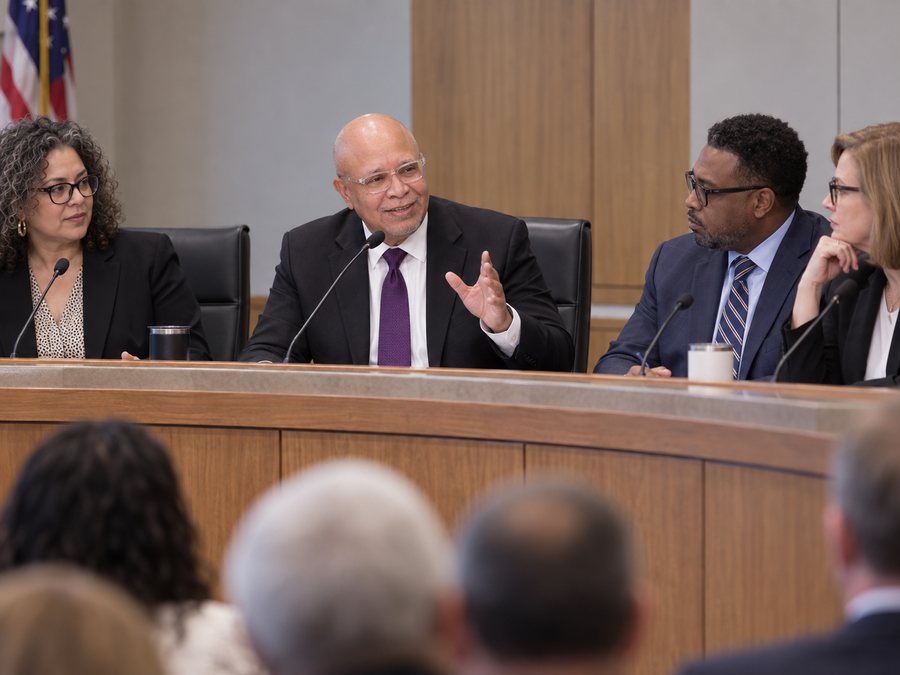
- 2017 to 2025Board of Managers, Central Health, the Travis County Hospital District
- to April 2017Director, Austin Public Health, City of Austin. The department earned accreditation from the Public Health Accreditation Board, among the first five accredited public health agencies in Texas.
- 2011 to 2015Deputy Director, Austin/Travis County Health and Human Services Department
- 1999Joined the Austin/Travis County Health and Human Services Department
- 2011 to 2014Chair, Advisory Council for the Elimination of Tuberculosis, Centers for Disease Control and Prevention
- LocalChair, Austin/Travis County Community Health Assessment and Improvement Planning
- RadioFounder and host of Health Talk on KAZI 88.7 FM for about a decade
Education and affiliations
- BAOglethorpe University, Atlanta, Georgia
- MPAUniversity of Pittsburgh
- Doctoral studyCoursework toward a doctorate in Management and Policy, The University of Texas School of Public Health, Houston
- FellowshipWoodrow Wilson Fellow
- MemberAssociate, American College of Healthcare Executives; National Forum for Black Public Administrators
Recognition
- 2015Garnet F. Coleman “Eternal Flame” award, Central Texas African American Family Support Conference, for commitment to mental health awareness and health disparities